
Why Sleep Tracking Data Often Causes More Performance Anxiety
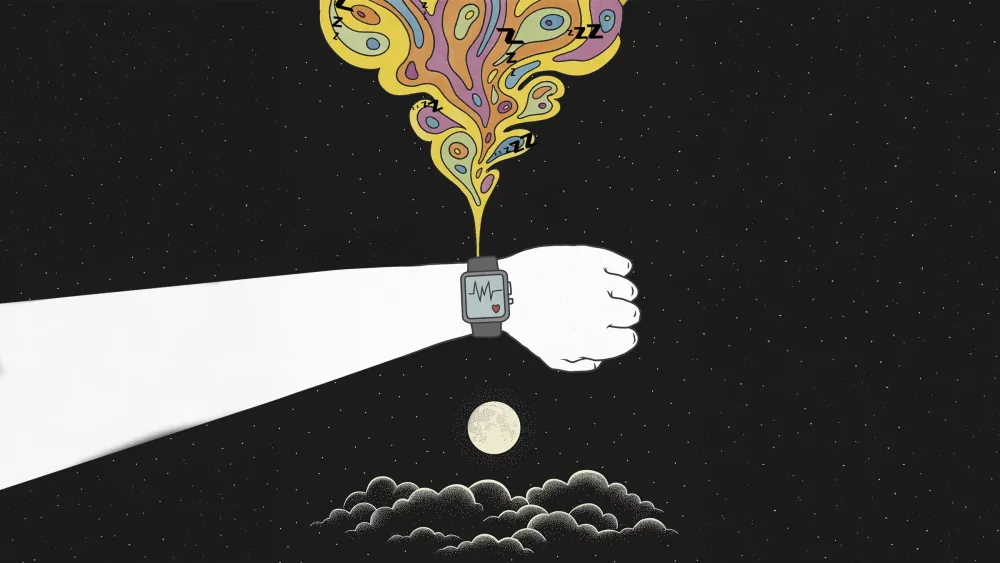
It is 3:00 AM. You are wide awake, staring at the ceiling, and acutely aware of the small, glowing device strapped to your left wrist. You know that somewhere inside its casing, a microchip is ruthlessly deducting points from your “sleep score” for every minute your eyes remain open. You squeeze your eyes shut and try to force yourself into a state of unconsciousness, but the pressure to perform for the algorithm only makes your heart beat faster.
The quest for perfect rest has somehow morphed into a high-stakes, competitive sport. We buy expensive sensors and slide monitors under our mattresses, expecting raw data to cure our chronic exhaustion. Instead, millions of people now wake up to a harsh, brightly lit scorecard dictating exactly how they should feel for the next sixteen hours. This constant surveillance frequently backfires, transforming the most natural biological process on earth into an exhausting test we constantly feel we are failing.
The Unintended Consequence of Quantified Rest
Medical professionals recently coined a new term to describe this modern phenomenon: orthosomnia. This condition is defined as an unhealthy, counterproductive obsession with achieving mathematically perfect sleep. Ironically, this anxiety is almost entirely driven by the very devices designed to help us rest.
When we begin measuring an involuntary bodily function, we inevitably start judging it. We end up treating a biological necessity as if it were a quarterly sales target that needs constant optimization. This unhealthy focus typically manifests in a few specific behaviors:
- Morning data dependency: Checking a numerical score before even getting out of bed to determine if you are allowed to feel rested.
- Score-driven mood swings: Permitting a low sleep grade to dictate your emotional state and focus for the entire day.
- Pre-sleep performance anxiety: Lying awake actively worrying about whether you will achieve enough deep sleep to satisfy the application.
A few decades ago, evaluating your night was incredibly simple. If you woke up feeling refreshed, you slept well. If you woke up groggy, you slept poorly. Today, that subjective feeling has been entirely replaced by objective, yet often deeply flawed, data points. A person might wake up feeling fully restored, stretch, and feel ready to tackle the day. But the moment they discover their device recorded insufficient rapid eye movement cycles, that feeling of restfulness evaporates, replaced by fatigue simply because a machine told them they failed.
How Algorithms Hijack Your Relaxation
Sleep requires surrender, but wearing a tracker engages your analytical brain. Lying in the dark, aware of a sensor, creates a vicious feedback loop: instead of just feeling restless, you calculate how your wakefulness will ruin your sleep score, triggering stress hormones that prevent actual rest.
This anxiety peaks after stimulating evening activities. For example, a player enjoying casino games at Runa Casino online experiences a normal adrenaline rush requiring a peaceful reset. If they immediately check their wrist monitor to track their dropping heart rate, they interrupt that recovery. Obsessing over physiological metrics to satisfy an algorithm entirely defeats the organic process of relaxing.
Three Reasons to Distrust Your Morning Scorecard
Compounding this performance anxiety is the uncomfortable truth that consumer sleep trackers are rarely as accurate as their marketing campaigns claim. Unless you are sleeping in a clinical laboratory with medical-grade electrodes attached directly to your scalp to measure actual brain waves, your device is simply making educated guesses.
By relying primarily on accelerometers to detect movement and optical sensors to read your pulse, these gadgets attempt to map out incredibly complex neurological states. This methodology leads to several frequent miscalculations.
Accelerometers Cannot Read Your Mind
Wrist monitors base a huge portion of their data on physical movement. However, lying perfectly still in bed while having a severe anxiety attack or pondering a stressful work project might register on your device as an hour of deep, restorative sleep. The device only knows that your wrist did not move; it has no idea that your brain is racing at a hundred miles an hour.
The Blur Between Light Sleep and Quiet Wakefulness
Devices frequently struggle to differentiate between the earliest stages of light sleep and simply being quietly awake. If you spend forty minutes reading a book in bed before turning off the lamp, your tracker might incorrectly log that time as part of your sleep cycle, artificially inflating your total hours. Conversely, normal, healthy twitches during a highly restorative dream can be misread as total wakefulness, completely tanking your score for no valid reason.
The Self-Fulfilling Prophecy of a Bad Morning
Perhaps the most dangerous flaw is the confirmation bias these devices create. If an algorithm inaccurately tells you that you only achieved ten minutes of deep sleep, your brain will actively look for evidence to confirm that data. You will spend the entire day feeling sluggish, unfocused, and irritable. This happens not because you actually slept poorly, but because the placebo effect of a bad score has thoroughly convinced your body it is exhausted.
The Analog Solution to a Modern Problem
Breaking free from the grip of performance anxiety requires a complete philosophical shift. We must stop viewing our bodies as machines that require constant, software-driven optimization. Sleep is not a spreadsheet, and it cannot be perfected through sheer force of will or constant data logging.
If you are ready to reclaim ownership of your nights and reduce nighttime anxiety, consider taking a few practical steps:
- Create a tech-free bedroom: Leave your smartwatch, phone, and tablet in another room to charge overnight so you are not tempted to check your status.
- Rely on physical feedback: Evaluate your rest based solely on how energized you feel after your morning stretch, entirely ignoring digital dashboards.
- Accept brief wakefulness: Understand that waking up in the middle of the night is a completely normal biological occurrence, not a data failure that needs to be fixed.
The most radical and effective intervention for sleep anxiety is often the simplest: take the watch off entirely. The ultimate metric for a good night of rest is not found in a colorful bar chart on a high-definition screen; it is found in your own biological feedback. When you stop treating your bed as a testing center, you finally give your mind the permission it needs to truly power down.
Kevin
Senior staff writer & editor delivering comprehensive analysis, news reports, and detailed guides.