
The Art of the Algorithmic Acknowledgment: Unpacking AI Handwritten Greeting Cards
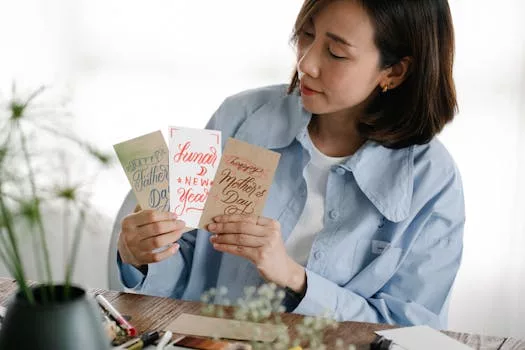
The notion of a machine crafting a heartfelt message might seem counterintuitive, even a little cold. We often associate greeting cards with personal touch, the gentle pressure of a pen on paper, the unique quirks of our own handwriting. Yet, the landscape of personal expression is rapidly evolving, and at its forefront, we’re seeing the emergence of AI handwritten greeting cards. This isn’t about replacing human sentiment; it’s about augmenting it, offering novel ways to connect and convey our affections in an increasingly digital world. Let’s dive into what this fascinating intersection of technology and tradition truly entails.
Bridging the Gap: What Exactly Are AI Handwritten Greeting Cards?
At their core, AI handwritten greeting cards leverage artificial intelligence to generate text that mimics human handwriting. This typically involves sophisticated algorithms trained on vast datasets of actual handwriting samples. These systems can then produce digital text that, when rendered on a card, looks remarkably like it was penned by a person. It’s a far cry from the generic, blocky fonts we’ve grown accustomed to in digital communication. The aim is to capture the nuances—the slight variations in letter size, the unique slant, the occasional flourish—that make handwriting feel personal and authentic. In my experience, the better the AI, the more indistinguishable it becomes from genuine penmanship.
The Genesis of Algorithmic Artistry: How Are They Made?
The creation process for AI handwritten greeting cards is a marvel of modern computing. It usually begins with a dataset of handwritten samples. These samples can be from a single individual, offering a highly personalized script, or from a diverse group to create a more generalized, yet still human-like, style.
Data Input & Training: The AI analyzes the patterns, strokes, and letter formations within these samples. It learns the unique characteristics of each letter, how they connect, and the overall flow of the writing.
Generative Models: Advanced AI models, such as Generative Adversarial Networks (GANs) or Recurrent Neural Networks (RNNs), are then employed. These models can “learn” the underlying distribution of the handwriting data and generate new, unseen samples that adhere to those learned patterns.
Personalization Options: Many platforms allow users to upload their own handwriting for the AI to learn from, or choose from a curated library of AI-generated scripts that can be further customized. Some even offer options to adjust the “imperfections”—the slight wobbles or pressure variations—to enhance realism.
Digital to Physical Output: Once the AI generates the text in a specific handwritten style, it’s then either printed directly onto a physical card or can be used as a digital image to be incorporated into e-cards. The seamless transition from digital creation to tangible product is key.
Beyond the Font: The Nuances of AI-Generated Penmanship
What sets AI handwritten greeting cards apart from simply choosing a script font is the level of sophistication in replicating human idiosyncrasies. Think about the subtle difference between how you might write your name casually versus when you’re carefully inscribing it.
Variability is Key: True human handwriting isn’t uniform. Letters within the same word can vary slightly in size and shape. AI models are increasingly adept at introducing this natural variability, preventing a robotic, too-perfect look.
Contextual Awareness: More advanced AIs can learn how letters connect based on their position in a word and the preceding letter. This leads to a much more fluid and natural appearance.
Emotional Nuance Simulation: While AI can’t feel emotion, it can learn to associate certain writing styles with emotional tones. For example, a more hurried, slightly bolder script might be associated with excitement, while a slower, more deliberate script could convey sincerity.
The Practical Perks: Why Consider AI for Your Greetings?
The rise of AI handwritten greeting cards isn’t just a technological novelty; it offers tangible benefits for individuals and businesses alike. One of the most significant advantages is the ability to scale personal touch.
Time-Saving for Busy Individuals: For those with limited time or perhaps less-than-stellar penmanship, AI offers a way to send beautifully rendered, personalized messages without sacrificing hours at the desk.
Enhanced Brand Personalization: Businesses can use AI to add a human touch to customer communications, whether it’s thank-you notes, order confirmations, or special promotions. This can significantly boost customer loyalty and engagement.
Accessibility for All: Individuals who may have physical limitations affecting their handwriting can still send cards that feel authentically theirs. This opens up a world of personalized communication that might otherwise be out of reach.
Consistency and Quality Control: For businesses needing to send many cards, AI ensures a consistent level of quality and appearance across all of them, something that can be challenging with manual handwriting. It’s interesting to note how many small businesses are exploring these options for a more intimate customer connection.
The Ethical and Emotional Landscape: Can AI Truly Be Personal?
This is where the conversation often gets the most interesting, and perhaps a little philosophical. Can a message generated by an algorithm truly convey personal sentiment? The answer, I believe, lies in how we perceive and utilize the technology.
The AI is a tool, much like a pen or a printing press. The intent behind the message, the words chosen, and the context in which the card is sent are what imbue it with emotion. The AI’s role is to present those heartfelt words in a visually appealing and personally resonant way. It’s about enhancing the delivery mechanism for human affection, not replacing the affection itself. Consider the rise of digitally signed e-cards; while the signature might be a digital replica, the message and the thought* behind it still hold weight. AI handwritten greeting cards take this a step further by offering a more tactile and visually familiar presentation.
Future Strokes: What Lies Ahead for AI Greetings?
The trajectory of AI in personalization is steep. We can anticipate even more sophisticated handwriting styles, greater customization options, and perhaps even AI that can learn and adapt to your writing style over time, creating a truly unique digital signature. The integration with other AI tools, like natural language processing for message generation, will likely create end-to-end solutions for personalized greetings.
Furthermore, we might see AI handwriting integrated into more than just cards – think personalized notes accompanying gifts, custom thank-you messages on product packaging, or even dynamic, handwritten digital invitations. The potential for this technology to redefine how we express ourselves in written form is immense.
Wrapping Up: Embrace the Evolution of Expressive Communication
AI handwritten greeting cards represent a fascinating evolution in how we express ourselves. They offer a powerful blend of technological innovation and the enduring human desire for personal connection. While the technology is sophisticated, its purpose is simple: to help you convey your thoughts and feelings in a way that feels both modern and intimately human. My advice? Don’t dismiss it as merely a gimmick. Explore the options, experiment with personalization, and see how this innovative approach can add a unique and memorable touch to your next important message. The future of greetings is here, and it’s more personal than you might think.
Kevin
Senior staff writer & editor delivering comprehensive analysis, news reports, and detailed guides.